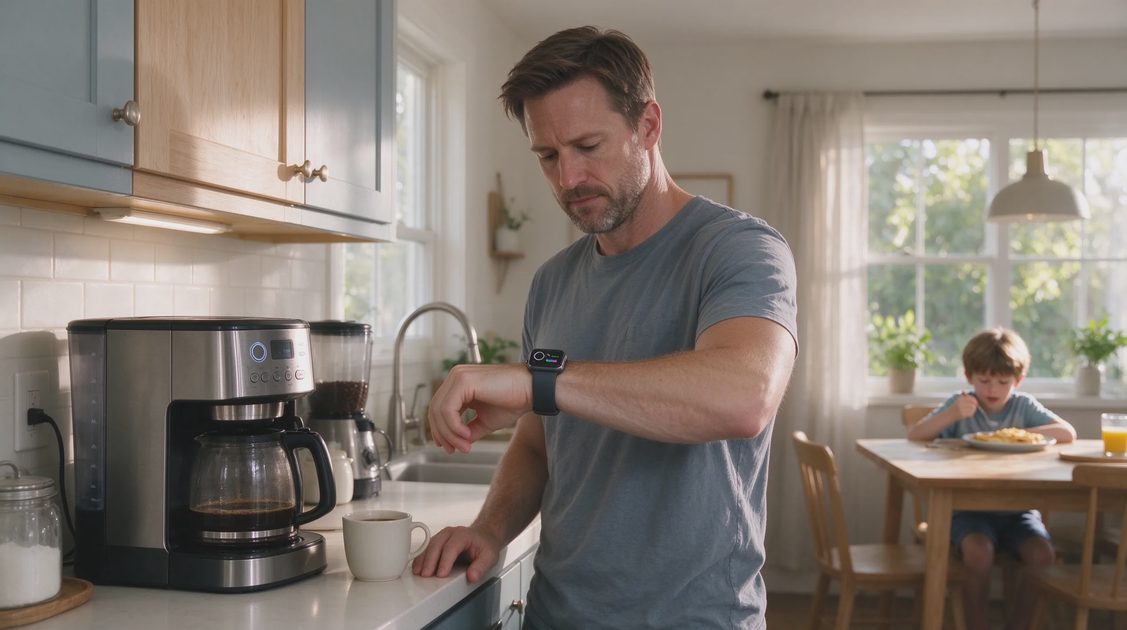
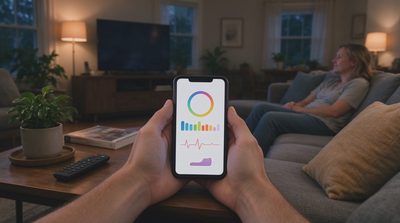
You closed your eyes around ten. You woke at six without an alarm. You felt steady, clear, and ready. Then the app delivered a score in the sixties and a note about insufficient deep sleep. The mismatch is jarring. The night felt successful. The number says otherwise. Which one do you believe?
I have asked myself that question more times than I care to admit. The honest answer is that both can be true at the same time, and the lived experience should carry more weight. Sleep trackers measure what they can measure. Restoration is larger than those measurements. Understanding why a good night can still produce a disappointing score is one of the most effective ways to reduce health-data anxiety.
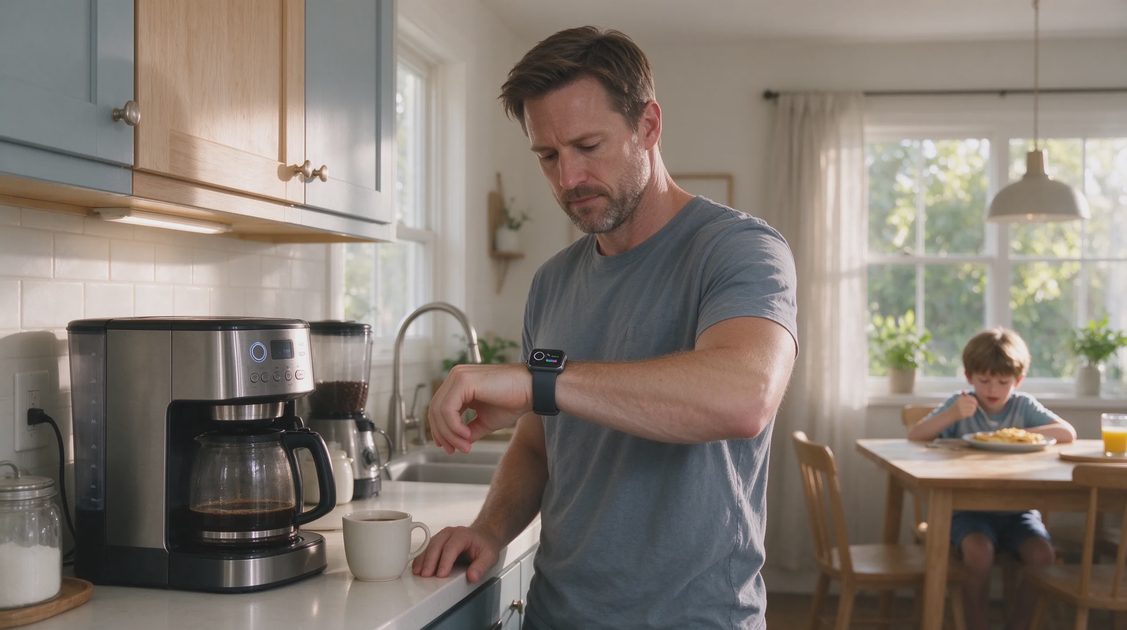
What Trackers Can See and What They Cannot
Consumer wearables excel at detecting motion and heart rate. They are reasonably good at estimating total sleep time for many people. They are less reliable at precisely allocating that time into light, deep, and REM stages.
Stages are defined by brain activity the wrist cannot access
Those stages are defined by brain-wave patterns. A wrist sensor has no direct access to brain waves. It uses movement, pulse, and sometimes temperature or oxygen as stand-ins. The stand-ins work better for some people and some nights than others. A still body with a steady, lower heart rate often gets labeled deep sleep. A body that shifts position or maintains a slightly higher pulse may get labeled light sleep even if the brain was in a restorative state.
The algorithm compares you to a group average
The algorithm is comparing your signals to patterns learned from large groups. Your particular night may simply sit outside the center of that distribution. This is not a design flaw so much as a measurement constraint. The device is doing sophisticated work with limited information. The output is an estimate with a confidence interval that is never shown on the screen.
Why the missing confidence interval matters
When the estimate lands lower than you expected, the missing confidence interval is the first thing to remember. The number looks precise. It is not. Treating a limited estimate as exact truth is the root of most score-related frustration.
Normal Biological Variation Is Not a Problem to Solve
Human sleep is variable by design. One night may contain more deep sleep, the next more REM. Total sleep time can shift by an hour without any underlying problem.
Everyday factors that shift sleep architecture
Stress, training load, menstrual cycle, room temperature, altitude, and even the previous day’s light exposure all influence the architecture of the night. A single lower score often reflects this ordinary variability rather than a meaningful deficit. I used to treat every dip as a personal shortcoming. After months of logging both scores and subjective rest, the pattern became obvious: my best-feeling days were distributed across a wide range of scores.
The body is often more consistent than the number
Once I accepted that variation is normal, the emotional spike that accompanied a low score began to shrink. The body was more consistent than the number. That realization alone reduced the daily pressure to “fix” every imperfect score.
Situations that commonly confuse the model
Alcohol can inflate early deep-sleep estimates while fragmenting later sleep. Intense late exercise can keep heart rate elevated. A restless partner or pet introduces motion that is not yours. A warm environment raises skin temperature. Illness changes breathing patterns. Travel and shift changes scramble the usual signals. In each case the night may still have been functionally restorative. The data simply became noisier.
How to Respond When Score and Body Disagree
The most useful response is a short, deliberate pause. Before adjusting bedtime, canceling plans, or deciding the night was a failure, ask one question: “How do I actually feel and function today?”
Give the body the deciding vote for the day
If the answer is “capable,” proceed with the day you intended. The score can be noted and set aside. If the answer is “depleted,” then the night may need attention regardless of the number. In both cases the body has the deciding vote for the immediate day.
Look for trends, not single points
For longer-term insight, look at trends rather than single points. A week of consistently lower scores that also matches lower energy is worth exploring. A single low score surrounded by solid nights and solid days is almost always noise. This distinction keeps the technology useful without letting it become punitive.
Create personal rules that protect you
Create a personal rule that protects you from over-reacting. Mine is: I do not change any habit based on one night’s data. I require at least three similar nights plus matching subjective evidence before I experiment with an adjustment. Another safeguard is to delay the first look at the score. Checking after you have already assessed your own energy removes the number’s ability to set the emotional tone.

The Quiet Cost of Letting the Score Override Experience
When we repeatedly override a clear sense of rest with a lower number, we teach the nervous system that external measurement is more trustworthy than internal experience. Over time that lesson can erode confidence in the body’s signals.
People begin to second-guess ordinary feelings
People begin to second-guess fatigue, hunger, and readiness. The tracker, meant to support health, quietly undermines the very self-trust that sustainable health requires. I have watched clients reclaim that trust by running simple side-by-side experiments. For two weeks they rated morning energy before opening the app. The correlation with scores was real but far from perfect.
Seeing the imperfect correlation changes the relationship
Seeing the imperfect correlation in their own handwriting was often enough to loosen the grip. The body had been right more often than the algorithm admitted. You can sleep well and still receive a mediocre score. The two facts can coexist without contradiction. The night’s job was to restore you. If you feel restored, the night succeeded. The score is a later, limited summary. It does not get to rewrite the outcome.
Keep measurement in a supporting role
You can still wear the device. You can still glance at longer trends when something feels off. You simply stop letting a single nightly number decide whether the night was a success. Let the data inform you, not run you. Your experience of the night is the primary evidence. Everything else is secondary.

Letters
No letters yet — be the first to write.