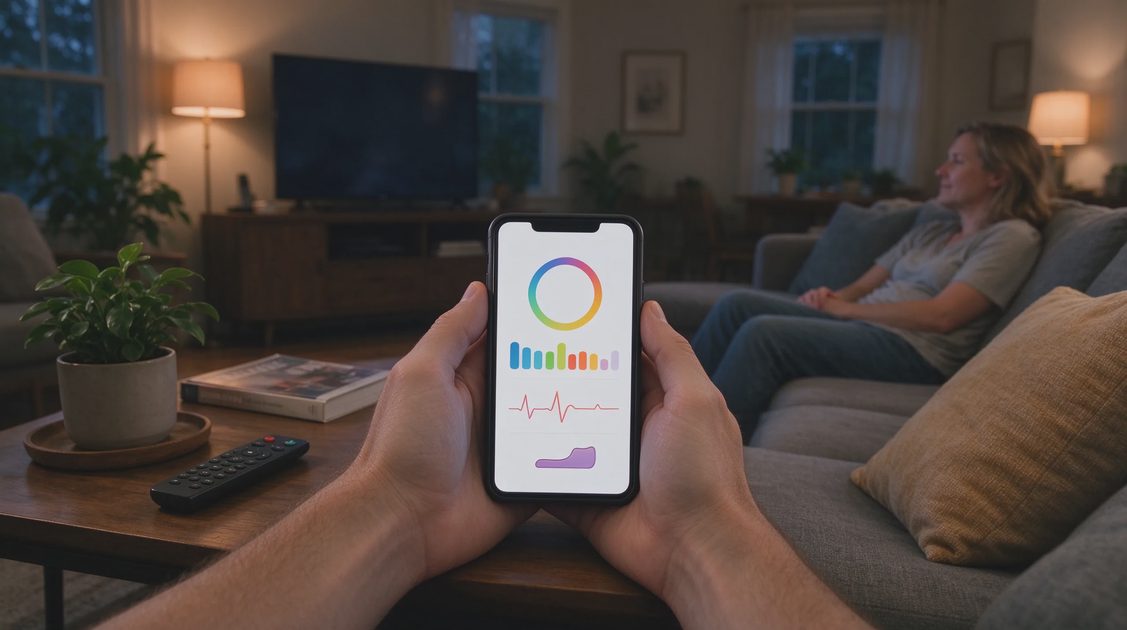
I used to wake up, reach for my phone, and feel my stomach drop before I had even opened my eyes. The number on the screen decided the mood of the next twelve hours. A green score meant I had “earned” a decent day. A red or yellow one meant I had already fallen short. I treated that single digit like a report card from a teacher who never explained the grading system and never offered a chance to improve the grade.
If you have ever done the same, you are not alone and you are not broken. Sleep trackers and the scores they produce are tools, not verdicts. They compress hours of movement, heart rate, temperature, and algorithm guesses into one neat number. That number can be interesting. It is almost never complete. And it is never a moral judgment about how well you lived the night or how worthy you are of rest.
Why a Single Number Feels Like a Final Grade
Most of us grew up with grades. A letter or a percentage told us whether we had succeeded or failed. When a wearable hands us a sleep score, the same old wiring lights up. The brain treats the number as feedback on performance. Low score equals poor performance. Poor performance equals something wrong with us.
The report-card reflex is learned, not natural
Sleep is not a test you can study for in the usual way. It is a biological process influenced by light, temperature, stress hormones, what you ate, how hard you worked, whether a child woke you, and dozens of other variables the sensor cannot fully measure. The device sees a portion of the picture and then ranks it. That ranking arrives on your screen with the authority of a final grade, even though no human teacher is behind it.
How the score quietly rewrites the morning
I learned this the hard way while working as a user-experience researcher for a wearable company. We watched people open the app within seconds of waking, then change their entire morning based on one number. Some canceled workouts. Some canceled social plans. Some spent the day compensating for a “bad” night that their body did not actually experience as bad. The score had become the story of the day before the day had even started.
What changes when you stop treating it as a grade
The moment you stop calling the number a grade, its emotional power drops. A score becomes one data point among many. You can notice it, decide whether it adds anything useful, and then set it aside. That small shift in language and posture is often enough to keep the morning from collapsing under a single digit.
What the Score Actually Measures—and What It Misses
A sleep score is usually a weighted blend of several estimates: total sleep time, time in different stages, restlessness, and sometimes heart-rate variability or respiratory rate. Each of those estimates carries its own error margin.
Sensors see movement and pulse, not brain waves
Wrist-based sensors are good at detecting movement and heart rate. They are less precise at distinguishing light sleep from deep sleep or wake from quiet stillness. Algorithms fill in the gaps with assumptions based on population averages. Those assumptions work reasonably well for large groups. They are less reliable for any single night in any single person’s life.
Why a solid night can still look mediocre
A night of solid, restorative rest can still produce a mediocre score if you moved more than the algorithm expected or if your heart rate stayed a little higher for reasons the device cannot know. Conversely, a fragmented night can sometimes look acceptable on paper if the numbers land inside the model’s preferred ranges. The score is a summary, not a photograph. Summaries leave things out.
The cost of letting the summary become the full truth
When we treat the summary as the full truth, we start arguing with our own lived experience. You may feel rested, clear-headed, and ready to move through the day, yet the number insists otherwise. Or you may feel foggy and the number looks fine, which can create a different kind of confusion. In both cases the score has been given more authority than it deserves.
How Daily Fluctuations Turn Into False Alarms
Sleep is naturally variable. One night you may sleep deeply for seven hours. The next night you may wake twice and still feel fine. The third night you may sleep eight hours but feel slightly off. None of these patterns is automatically a crisis.
Bodies adapt; scores do not always keep up
Bodies adapt. Moods shift. Workloads change. Hormones cycle. Weather and light exposure matter. A single low score is often just noise. The trouble begins when we treat every dip as a signal that demands immediate correction. Checking the score first thing turns a normal fluctuation into an emotional event.
The quiet stress of repeated micro-judgments
The nervous system responds as if something important has been lost. Cortisol rises a little. The day starts with a subtle sense of deficit. Over weeks and months that repeated micro-stress adds up. The tool meant to help you rest begins to erode the very calm it was supposed to support.
What a private log revealed for me
I used to keep a private log of my scores and my subjective energy. After a few months the pattern was clear: the correlation was real but modest. Some low-score nights left me feeling perfectly capable. Some high-score nights left me flat. The lived experience was a better guide for deciding whether I needed an earlier bedtime or a slower morning than the number alone.
Practical Ways to Keep the Score in Its Proper Place
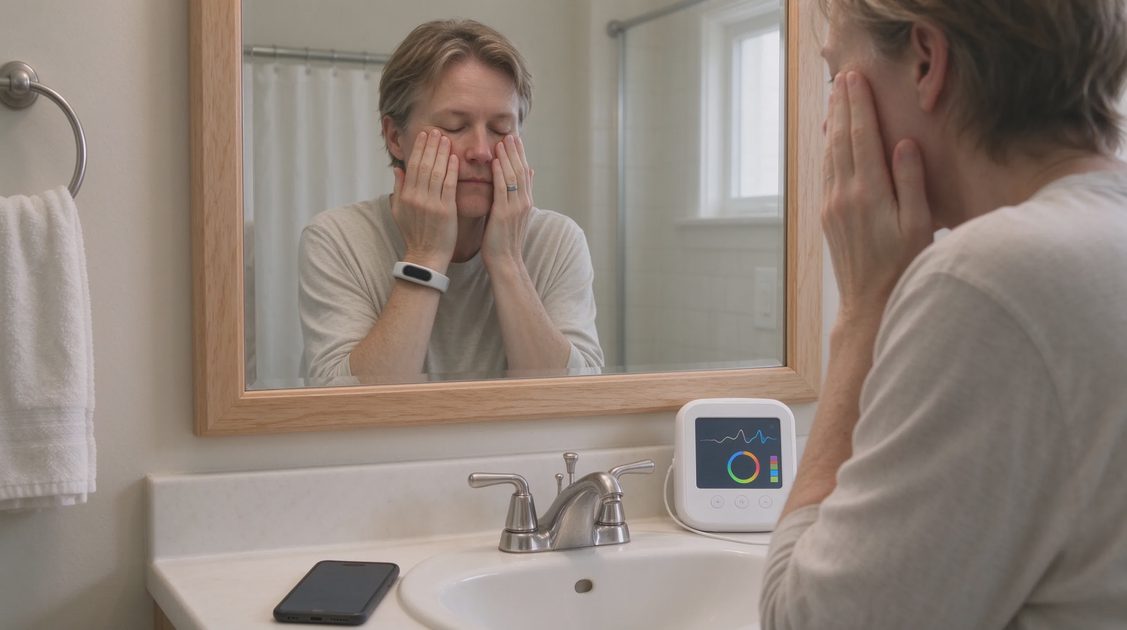
You do not have to throw the tracker away. You only have to change the relationship. The following steps have helped many of the people I work with, and I still use them myself.
Decide when you will look—and when you will not
Looking immediately upon waking is the highest-anxiety option. Waiting until after you have had water, moved a little, and checked in with how your body actually feels gives the lived experience a head start. Some people prefer a weekly review instead of a daily one. That single shift often reduces the emotional charge dramatically.
Ask better questions of the number
Instead of “Did I succeed or fail last night?” try “What does this score add to what I already notice about my energy, mood, and focus?” If the answer is “not much,” you are free to set it aside. If the answer is “I see a pattern of shorter sleep over the past week that matches how tired I have felt,” then the data has earned a place in the conversation.
Create a simple personal rule for interpretation
Mine is straightforward: one night is noise, three nights in a row may be a signal, a week of consistent change is worth noticing. This rule keeps me from overreacting to a single data point while still allowing useful trends to surface. Notice the language you use as well. Saying “my score was low” is different from saying “I failed at sleep.” Softening the language softens the impact.
You are not a student waiting for a grade. You are a person living a full life that includes imperfect nights, recovery days, and ordinary human variation. The score is a rough sketch. Your experience is the full drawing. Let the data inform you, not run you. The morning belongs to you, not to the number on the screen.
Letters
No letters yet — be the first to write.