
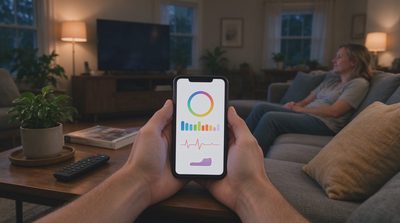
There is a particular kind of tiredness that arrives before the day has even begun. You open your eyes, reach for the phone out of habit, and within seconds a number or a color-coded stage chart has rewritten the story of the night. Suddenly you feel heavier. The thought of the day ahead feels steeper. You were not this tired thirty seconds earlier. The data did that.
I have lived that moment more times than I can count. So have many of the adults I work with. The tracker was supposed to help us understand recovery. Instead it became another source of depletion. The good news is that this pattern is changeable. You do not need to abandon useful technology. You only need to change the order and the weight you give it in the first hour of the day.

How the Morning Metric Spiral Takes Hold
The spiral is almost always the same. The device sits on the nightstand or charges beside the bed. Waking becomes the cue to check. The score appears. If it is lower than expected, the mind immediately begins a quiet inventory of everything that might have gone wrong.
The automatic inventory of last night’s “mistakes”
The late dinner, the stressful conversation, the extra glass of wine, the racing thoughts at 2 a.m.—each item on the list adds a layer of self-criticism. By the time you stand up, you are already carrying a small weight that was not there when you first opened your eyes. Even a “good” score can create its own pressure. You may feel you now have to live up to the number—be productive, be cheerful, be fully recovered.
Why certain people feel the spiral more intensely
This pattern is especially common among people who already feel responsible for optimizing every part of life. Parents, caregivers, knowledge workers, and anyone managing high cognitive load are particularly vulnerable. The tracker promises certainty in an uncertain domain. When the certainty arrives as a low number, the emotional cost is immediate and the day starts behind.
The quiet shift from tool to supervisor
Over time the device stops feeling like a helper and starts feeling like a supervisor that never sleeps. The first decision of the day has been outsourced to an algorithm. That outsourcing is reversible, but only if you notice it and deliberately change the sequence.
Why Checking Can Make the Body Feel More Tired
There is a physiological reason the fatigue intensifies. Anticipatory stress raises cortisol. Cortisol is useful for getting out of bed, but an extra spike triggered by disappointment or worry is not restorative.
The nervous system reads disappointment as threat
The nervous system receives a quiet signal that something is wrong. Muscles tense slightly. Breathing becomes shallower. The subjective sense of tiredness increases even if total sleep time was adequate. I saw this repeatedly in research sessions. Participants would rate their morning energy higher before opening the app than after.
The gap between felt energy and reported score
The gap was not dramatic every day, but it was consistent enough to matter. The act of checking had become a stressor. The tool designed to measure recovery was interfering with recovery. That interference is optional. It is not an inevitable feature of owning a tracker.
What happens when the first hour belongs to data
When the first hour belongs to a dashboard, the day often feels already behind. The body never gets a clean chance to report its own state. The data speaks first and the lived experience is forced to catch up or argue. Reversing that order is the single most effective change most people can make.
A Practical Reset for the First Thirty Minutes
The most effective reset I know is simple and does not require deleting apps or throwing devices away. It only requires changing the sequence of the first twenty to thirty minutes.
Keep the phone from speaking first
Keep the phone face down or in another room for the first stretch of the morning. If you use the phone as an alarm, switch to a basic alarm clock for a week or use the phone’s focus mode that blocks health apps until a set time. This one boundary removes the automatic cue.
Let the body report before the algorithm does
Sit on the edge of the bed or stand by a window. Notice temperature, muscle tension, clarity of thought, and overall heaviness or lightness. Give that internal report a full minute. You are collecting the primary data—the only data that comes directly from your own nervous system. Then move a little—walk to the kitchen, stretch, make the bed—before you look at any numbers.
Open the data only with a specific question
If you still want the score, open it with a clear question rather than an open-ended search for judgment. Useful questions include: “Does this number match how I feel?” or “Is there a multi-day pattern worth noticing?” Avoid “How bad was last night?” That framing almost always produces an emotional answer rather than a practical one.

Designing a Review Rhythm That Does Not Drain You
Many people discover they do not need daily scores at all. A weekly review is often enough. Choose one consistent time—Sunday evening or Monday morning work well for most schedules—and look at the past seven days together.
Trends become visible; single nights lose power
When you see seven nights together, outliers lose their emotional charge. You can ask whether sleep is generally supporting the life you are living or whether a small adjustment is needed. The same data that felt chaotic day by day often looks coherent and manageable in a weekly view.
What to notice during a short intentional pause
If the fatigue has become significant, consider turning off sleep scoring and stage charts for seven days while continuing to wear the device if you like the other features. Keep a simple paper or notes-app log of approximate bedtime, wake time, and a 1-to-5 energy rating at mid-morning and mid-afternoon. At the end of the week compare the subjective log with whatever the device recorded in the background.
Reclaiming the first hour as your own
Most people find that their internal sense of rest and the device’s estimates overlap more than they expected, yet the emotional charge is far lower when the number is not the first thing they see. The pause teaches the nervous system that the day can begin without a grade. You can still use the tracker. You can still learn from longer-term patterns. You simply stop letting it speak first. The body speaks first. The data, if needed, speaks second. That order is the difference between a tool that supports rest and a tool that quietly steals it.
Let the data inform you, not run you. The morning is yours to begin.
Letters
No letters yet — be the first to write.