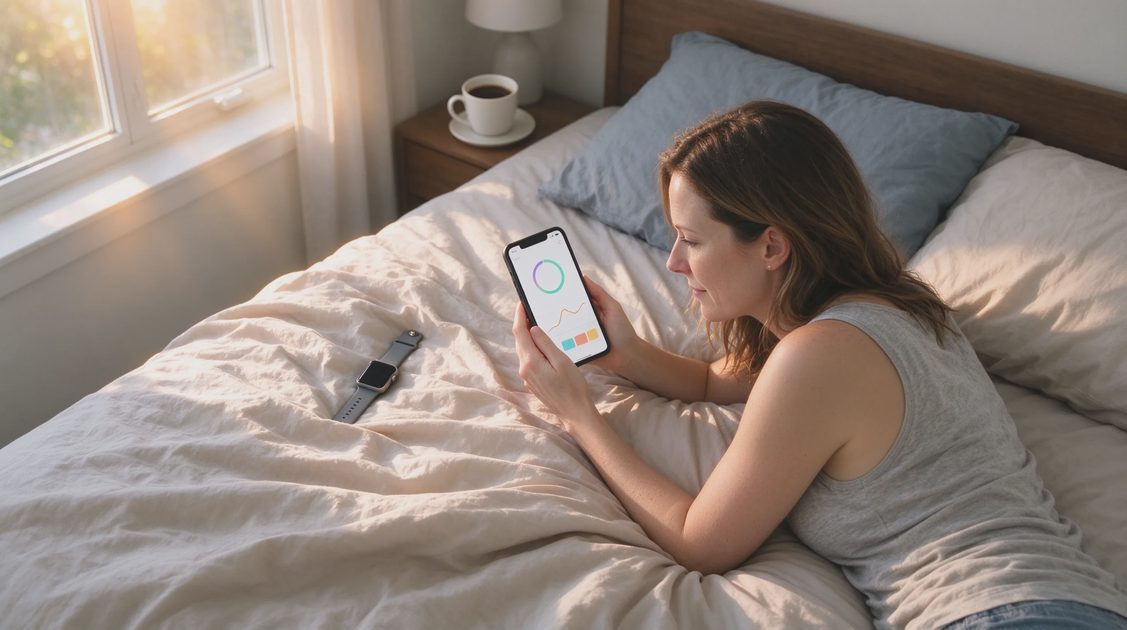
You slept through the night. You woke without an alarm. You felt clear enough to make breakfast and start the day. Then the app informed you that your deep sleep was low, your restlessness was high, and your overall score was disappointing. Suddenly the solid night you just lived became a problem to solve.
This mismatch is one of the most common sources of sleep-related anxiety I encounter. The data says one thing. The body says another. When we automatically side with the data, we begin to distrust our own experience. That distrust is rarely helpful and often exhausting. The truth is simpler and more forgiving: poor data and a poor night’s sleep are not the same thing.
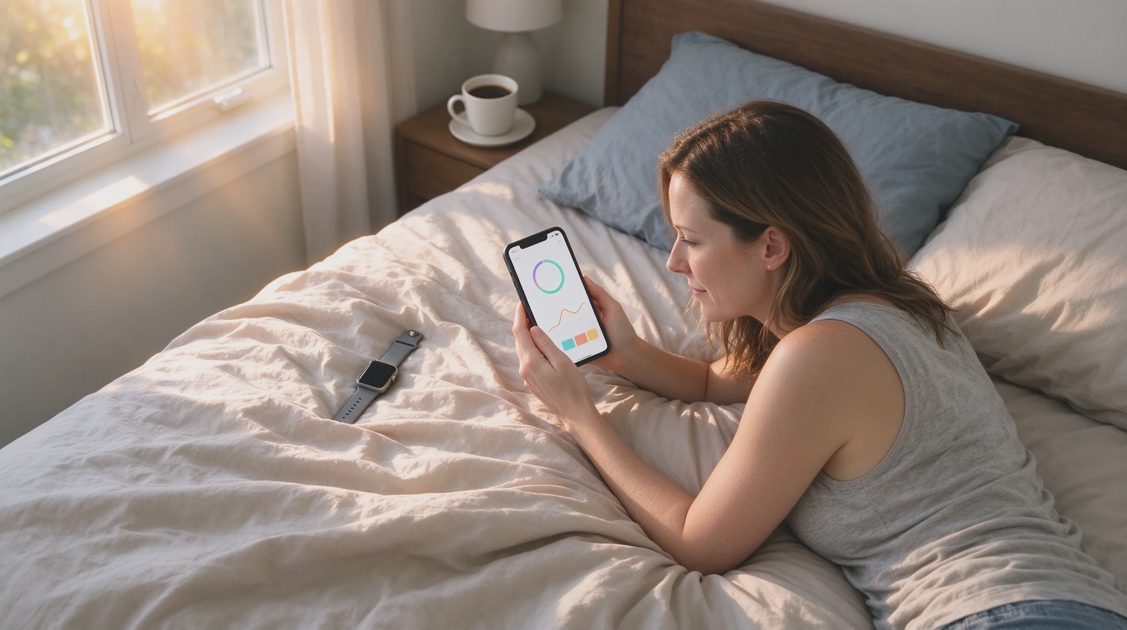
How Sleep Trackers Actually Gather Their Numbers
Most consumer wearables rely on a combination of accelerometers to detect movement and optical heart-rate sensors to detect pulse. Some add skin temperature or blood-oxygen estimates. From these signals the device infers when you fell asleep, when you woke, and how much time you spent in light, deep, and REM stages.
These are educated guesses, not direct brain readings
These inferences are educated guesses, not direct observations of brain activity. Clinical sleep studies use EEG electrodes on the scalp. Your wrist does not have that information. The algorithm fills the gap by looking for patterns that usually accompany each stage in large groups of people. When your night fits the average pattern, the estimate is often reasonable. When your night is atypical, the estimate can drift.
Movement and stillness are easy to misread
Lying still does not always mean deep sleep. Moving does not always mean wake. A quiet period of light sleep can look like deep sleep to the sensor. A period of vivid dreaming with small muscle twitches can look like restlessness. The device is doing its best with limited inputs. It is not reading your mind or your brain waves.
Why population averages fail individual nights
The model was trained on group data. Your particular combination of stress, temperature, partner movement, or recovery needs may sit outside the center of that distribution. The resulting number is still an estimate with an invisible margin of error. Treating it as precise truth is the first step into unnecessary worry.
Common Situations That Produce Noisy Data
Several everyday conditions reliably generate scores that feel wrong. Recognizing them helps you separate measurement problems from actual rest problems.
Environment and temperature effects
A warm room or heavy blankets can raise skin temperature and heart rate slightly, which some algorithms interpret as lighter sleep. A cool room can do the opposite. Neither condition automatically means the night was poor; it means the sensor’s assumptions were off.
Alcohol, exercise, and illness
Alcohol often increases deep-sleep estimates in the first half of the night and fragments the second half; the overall score may not capture how unrefreshed you feel. Intense evening exercise can keep heart rate elevated longer than the model expects. Illness, even mild, changes breathing and movement patterns. Travel across time zones scrambles the usual signals.
Life factors the algorithm cannot see
Pregnancy, menstrual cycle shifts, certain medications, a restless partner, or a pet on the bed all introduce variation the average model was not fully trained on. None of these situations means the night was automatically “poor.” They mean the measurement conditions were imperfect. The data became noisier. The lived experience remains the more reliable guide for how recovered you actually are.
When the Night Really Was Difficult
Of course, some nights are genuinely hard. You may have woken multiple times, struggled to fall back asleep, or risen feeling unrefreshed despite adequate time in bed. In those cases the tracker often moves in the same direction as your experience.
Alignment between data and feeling is useful
When the score is low and you feel low, that alignment can be helpful. It confirms that something about the night was disruptive and may point toward a pattern worth addressing—late caffeine, an uncomfortable mattress, unresolved stress, or simply a stretch of high life demand.
The body still holds the deciding vote
The key is not to let the score be the only evidence. If you feel rested, the night did its job even if the number looks mediocre. If you feel depleted, the night may need attention even if the number looks fine. Your internal sense of restoration is primary data. The tracker is secondary.
Building a simple side-by-side check
One of the most effective practices I recommend is a two-column check for a week or two. Each morning, before opening the app, write a brief note: “Felt: rested / okay / tired / foggy” and a rough energy rating from 1 to 5. Then open the tracker and note the score. At the end of the week look at the pairs. Most people discover that agreement is common but not perfect, and that the emotional reaction to a low score is often stronger than the actual functional impact of that night.
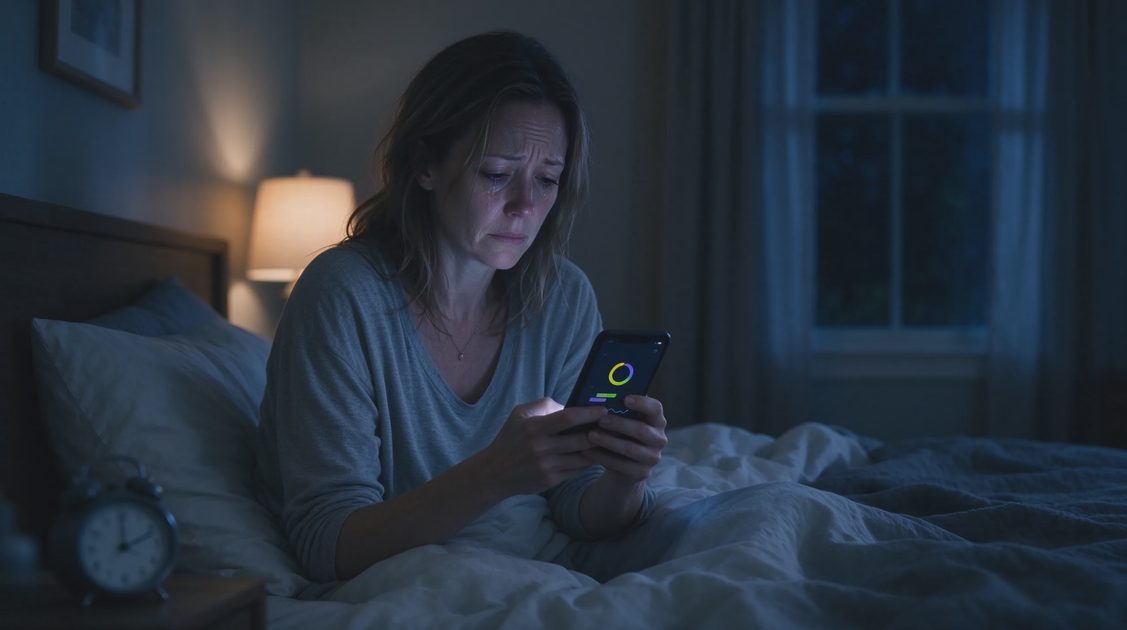
How to Respond When Data and Experience Disagree
When the data and the body disagree, default to the body for immediate decisions. If you feel capable, proceed with the day you planned. If you feel depleted, adjust the day regardless of what the score claims.
Let multi-day patterns earn their place
Later, if a multi-day pattern emerges that matches both low scores and low energy, then the data has earned a place in the conversation. You might experiment with an earlier wind-down, a cooler room, or a consistent wake time. You make the change because the overall picture suggests it, not because one night’s number demanded it.
Accept that some uncertainty is permanent
No consumer device currently offers perfect sleep staging. Even research-grade wearables have margins of error. That uncertainty is not a failure of the product. It is a limitation of the measurement method. Accepting the limitation frees you from treating every discrepancy as a personal mystery that must be solved. Some nights the data will simply be less accurate. That is allowed.
Keep the technology in a supporting role
This approach keeps the technology in a supporting role. It prevents the common trap of chasing a better score at the expense of actual rest. I have watched people stay in bed longer than they needed, skip morning light, or cancel plans solely to improve the next night’s number. The score improved. The life did not. You are allowed to sleep well and receive a mediocre score. You are allowed to feel tired and receive a decent score. Neither situation requires you to rewrite the story of the night. The night already happened. Your body already lived it. The data is a later approximation.
Let the data inform you, not run you. When the approximation and the experience diverge, trust the experience first. The goal is a life with enough rest, not a perfect overnight report.
Letters
No letters yet — be the first to write.