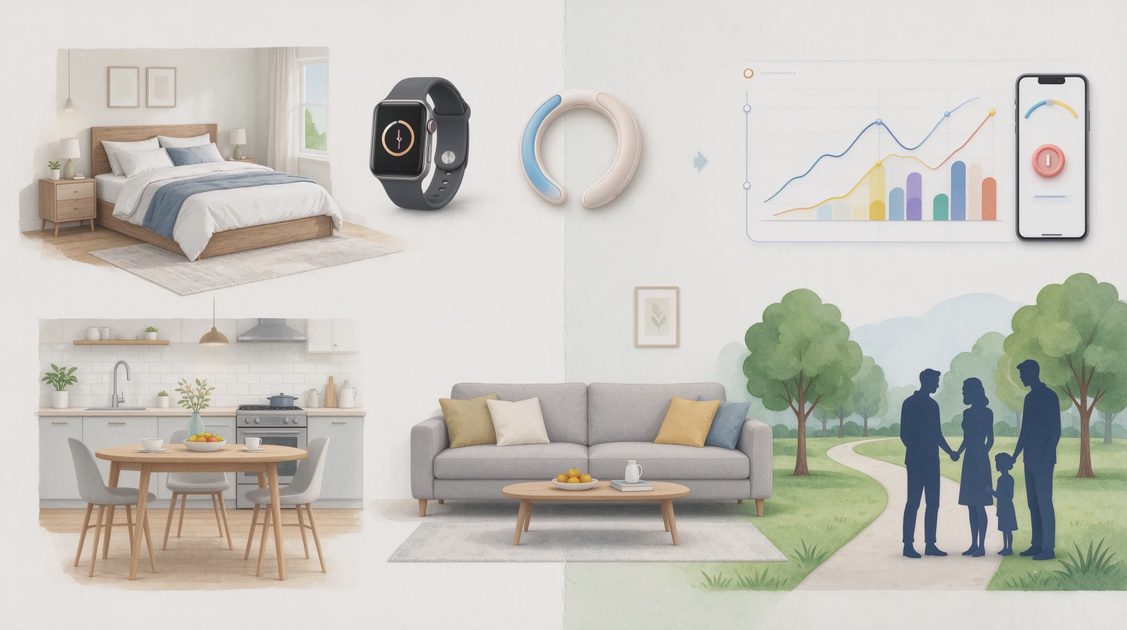
There is a quiet cost to continuous measurement that is easy to miss. The more we rely on devices to tell us how recovered, energized, or ready we are, the less practiced we become at noticing those states directly. Over time the internal signals grow fainter—not because they have disappeared, but because attention has been trained elsewhere. People then feel they need the dashboard even more, and the cycle tightens.
I noticed this in myself after years of detailed tracking. On days when the battery died or the app glitched, I felt strangely uncertain about my own capacity. The uncertainty was not evidence that I needed more data. It was evidence that I had outsourced a basic form of self-knowledge. Rebuilding that knowledge did not require abandoning every device. It required deliberate practice at noticing energy, mood, and readiness through the body and the day itself.
Better energy awareness is a skill. Like any skill it improves with modest, repeated attention. The methods below are simple enough to use on ordinary days and sturdy enough to reduce dependence on constant external scores.
Why Direct Awareness Matters More Than Perfect Data
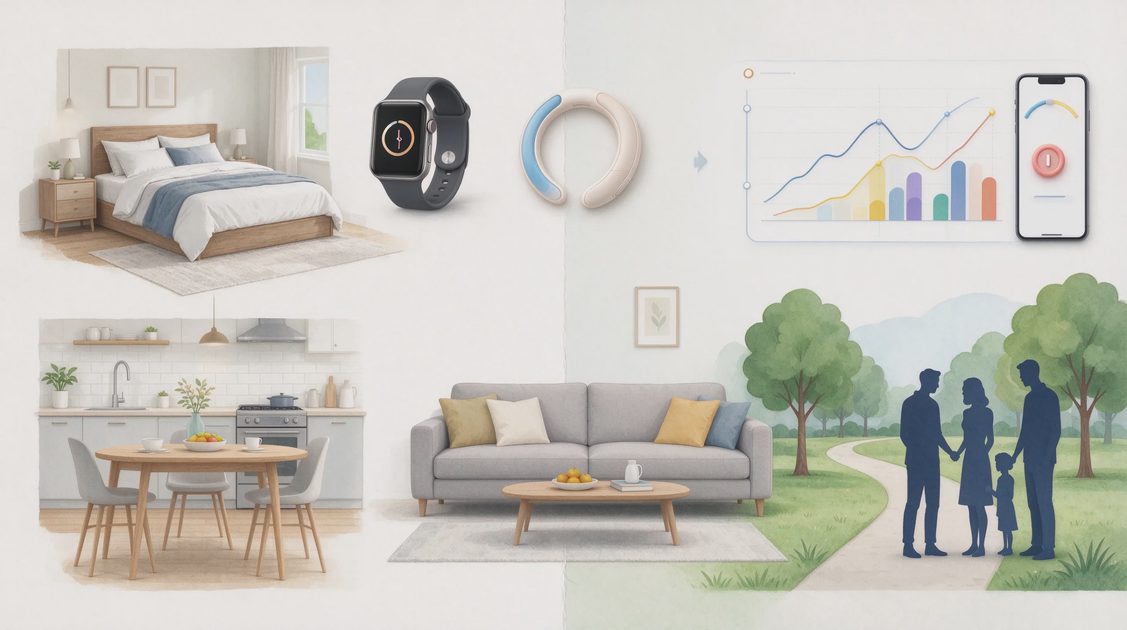
External metrics can be useful. They cannot replace the information that only your nervous system has.
The body reports in real time; the dashboard reports in summary
A wearable gives you a retrospective estimate. Your body gives you continuous, present-tense information about muscle tension, mental clarity, emotional tone, and physical ease or heaviness. When attention stays only on the summary, the real-time signals are underused. Decisions then lag behind the actual state of the system.
Self-trust erodes when every feeling needs external confirmation
If you routinely check a score before deciding whether you are tired, the internal sense of tiredness begins to feel less authoritative. Over months this can create a subtle dependence. Rebuilding trust requires deliberately acting on internal signals even when no confirming number is available.
Many daily adjustments do not require numerical precision
Deciding whether to take a short walk, eat sooner, dim the lights, or stop a work block rarely needs a precise recovery percentage. It needs a rough, honest sense of capacity. That rough sense is available without a device once attention is trained to notice it.
Simple Practices That Rebuild Energy Awareness
These practices are deliberately low-tech and low-demand.
The three-point check several times a day
Pause for twenty seconds and notice three things: physical heaviness or lightness in the body, clarity or fogginess in the mind, and overall emotional tone (settled, flat, restless, steady). No scoring required. Just naming. Doing this at mid-morning, mid-afternoon, and early evening creates a personal map of how energy actually moves through your day.
Compare the check with what the day has already asked of you
After the three-point check, ask one linking question: “Does this state make sense given what the day has contained so far?” Often the answer is yes—poor sleep, a hard conversation, skipped lunch, or intense focus will show up in the body. Making the link strengthens the understanding that energy is responsive, not random.
Use ordinary transitions as awareness cues
Instead of adding new habits, attach noticing to things you already do: waiting for coffee to brew, walking to the car, washing hands, closing a laptop. These existing transitions become brief opportunities to check in without requiring extra time or willpower.
Making Decisions From Awareness Instead of Scores
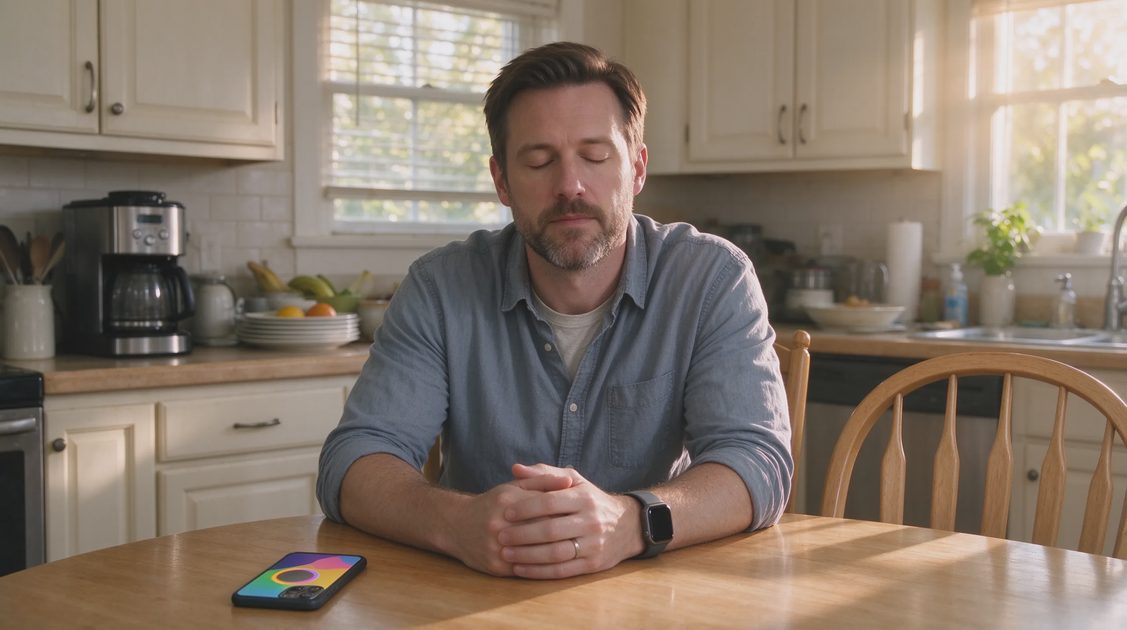
The point of better noticing is better day-to-day choices.
Let the felt sense set the next action
If the three-point check reveals heavy limbs and mental fog, the next useful action might be a short walk, a glass of water, or a lighter work block. If the check reveals steady energy, the planned harder task can proceed. The decision is made from present information rather than from a morning score that may no longer reflect the current state.
Practice deciding before looking at any metric
On days when you still wear a tracker, make one or two small decisions—whether to exercise, how to structure the next hour—before opening the app. Then look if you wish. The sequence reinforces that authority remains with the person, not the number. Over time the need to look often diminishes.
Keep a brief weekly reflection instead of daily scoring
Once a week, write three or four sentences about overall energy patterns: when it was strongest, when it dipped, what seemed to help or hinder. This reflection builds longer-term understanding without the emotional charge of daily numerical evaluation. Patterns become visible through language rather than through graphs.
Reducing Dependence Without Creating a New Project
The goal is not to become a perfect observer. The goal is to restore a workable degree of self-knowledge.
Expect the skill to feel awkward at first
If attention has lived primarily on screens, turning it inward can feel unfamiliar or even uncomfortable. That awkwardness is normal and usually fades within a couple of weeks of light practice. It is not evidence that you are doing it wrong.
Allow devices to remain available without being required
You can still wear a tracker and glance at trends when something feels off. The difference is that the glance becomes optional rather than compulsory. Many people find that once direct awareness is stronger, they open the apps less often and with less urgency.
Protect the practice from optimization pressure
Noticing energy is not another domain to perfect. There is no ideal number of daily check-ins. There is no advanced level to reach. The practice stays useful only as long as it remains light and kind. If it starts to feel like another performance metric, simplify it further or pause it.
Better energy awareness returns a form of authority that continuous tracking can quietly erode. The body has been reporting all along. Learning to hear it again does not require abandoning every useful tool. It requires deliberate, modest attention to signals that are already present. Practice the short check-ins. Link them to the shape of the day. Make a few decisions from the felt sense before consulting any number. Over time the dashboard becomes less necessary for ordinary choices. Let the data inform you when it is genuinely useful. Never let the absence of data leave you uncertain about your own capacity. You were living in this body before the metrics arrived. You can learn to inhabit it more fully again.
Letters
No letters yet — be the first to write.