
Everything in this body of work rests on one practical sequence: notice first, measure second. The sequence is deliberately simple because complicated systems collapse under ordinary fatigue. When you begin with the body’s present-tense report and only then consult the numbers, the data stays in its proper role. When you reverse the order, the numbers quietly take charge of mood, decisions, and self-worth.
I arrived at this method after years of watching people—and myself—hand authority to dashboards. The shift is not anti-technology. It is pro-proportion. Measurement can be useful. It is almost never the most important information available to you in any given moment. The method formalizes that truth into a repeatable practice.

The Core Sequence in Daily Life
The practice has three movements that can be completed in under two minutes.
Pause and collect the body’s report
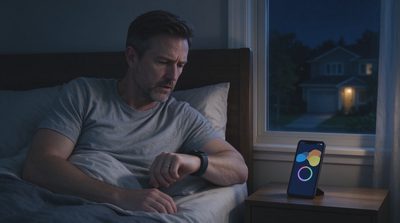
Before any screen, take a short pause. Notice physical heaviness or lightness, mental clarity or fog, emotional tone, and overall sense of capacity. You can rate each on a simple 1-to-5 scale or simply name them. This is primary data. It is generated by the only system that is actually living the day. Giving it the first word establishes the correct hierarchy.
Form one practical question before opening any app
Ask something the data might reasonably help answer: “Does last night’s sleep timing match the fatigue I feel?” or “Is there a multi-day pattern worth noticing?” Avoid open-ended questions such as “How am I doing?” or “Did I fail?” Those questions invite judgment rather than information. A specific question keeps the subsequent look brief and purposeful.
Consult the metric, then return to the body’s report
Look at the pre-selected number or trend. Compare it lightly with what you already noticed. If the two align, you have confirmation. If they diverge, default to the body’s report for immediate decisions and treat the metric as one more data point for longer-term pattern recognition. Then close the app. The sequence ends with authority remaining where it started—with the person.
Why the Order Matters More Than the Metrics
Reversing the sequence produces predictable costs.
Measurement first trains the nervous system to wait for external permission
When the first information of the day is a score, the body learns that its own signals are secondary. Over weeks and months this training reduces confidence in direct experience. People begin to feel they cannot know how recovered or capable they are without consulting the device. The method reverses that training by forcing the internal report to come first.
Judgment questions activate threat circuitry
Questions that treat the number as a verdict raise mild stress responses. Those responses color the subsequent hours even when the score itself is neutral. By forming a practical question in advance, you reduce the likelihood that the look will become an evaluation of your worth.
The method scales across any device or season
You can use the same sequence with a simple step counter, a full-featured smartwatch, or no device at all. You can apply it daily, only on weekdays, or only when something feels off. Because the core move is internal, it survives changes in hardware, app design, and life circumstances.
Implementing the Method Without Turning It Into Another Project
The practice stays useful only while it remains light.
Attach it to existing transitions
Use moments you already experience: sitting up in bed, waiting for coffee, closing a laptop, washing hands before a meal. These transitions become the cue for the short pause and body report. No new blocks of time are required.
Limit the metrics that are allowed into the sequence
Only numbers that have already proven useful in your own decisions are invited. Everything else stays hidden. A shorter list makes the “measure second” step faster and less emotionally charged.
Expect imperfect adherence and return without drama
Some days you will open the app first out of habit. Notice it, close the app, and do the body report afterward. The method is not a purity test. It is a preferred order that becomes more automatic with repetition. Harsh self-criticism for imperfect use only adds the very evaluation the method is designed to reduce.
Using the Method for Longer-Term Decisions
The same sequence applies when reviewing weekly trends or deciding whether to change a routine.
Begin the weekly review with remembered experience
Before opening any dashboard, write a few sentences about how the week felt: energy, sleep quality as lived, mood stability, points of friction. This written primary data becomes the reference against which the metrics are then compared.
Let divergence inform curiosity rather than self-correction
When the numbers and the remembered experience diverge, ask what might explain the gap—unusual stress, measurement limitations, illness, travel—rather than immediately trying to force the body to match the score. Curiosity keeps the relationship exploratory. Forced correction often recreates anxiety.
Decide changes from the combined picture, with experience weighted more heavily
If both the lived week and the metrics suggest that sleep timing has drifted and energy has dropped, a small bedtime experiment may be warranted. If only the metrics look concerning while the days felt steady, the more common wise response is to leave the routine alone and recheck later. Experience carries the heavier vote.

The Larger Promise of the Method
Notice first, measure second is more than a checking routine. It is a stance toward technology and toward yourself.
It restores proportion
Data becomes one input among others instead of the organizing principle of the day. That proportion frees attention for the parts of life that no sensor can capture—conversation, ordinary pleasure, the feeling of a walk without a pace target, the quiet of a morning that has not yet been graded.
It builds durable self-knowledge
Every time you collect the body’s report before consulting the number, you practice trusting the primary source. Over months that practice accumulates into a more stable sense of your own patterns, capacities, and needs. The dashboard becomes optional for ordinary decisions.
It remains available in every season
When life is calm, the method keeps data from expanding beyond its usefulness. When life is hard, the method provides a way to stay in contact with yourself even if every tracker is turned off. The sequence does not require perfect conditions. It only requires the willingness to begin with what is already true in the body.
This is the central practice of Scoreless Living. Notice how you feel and what the day actually requires. Then, if it is useful, measure. Let the measurement inform the edges of your decisions. Never let it become the authority that runs them. You were living in this body before the first wearable arrived. You can inhabit it with clearer attention and quieter data than the current culture of continuous scoring suggests. Let the data inform you, not run you. The method is simple enough to begin tomorrow morning. The benefit compounds every time you choose the order deliberately.


Letters
No letters yet — be the first to write.