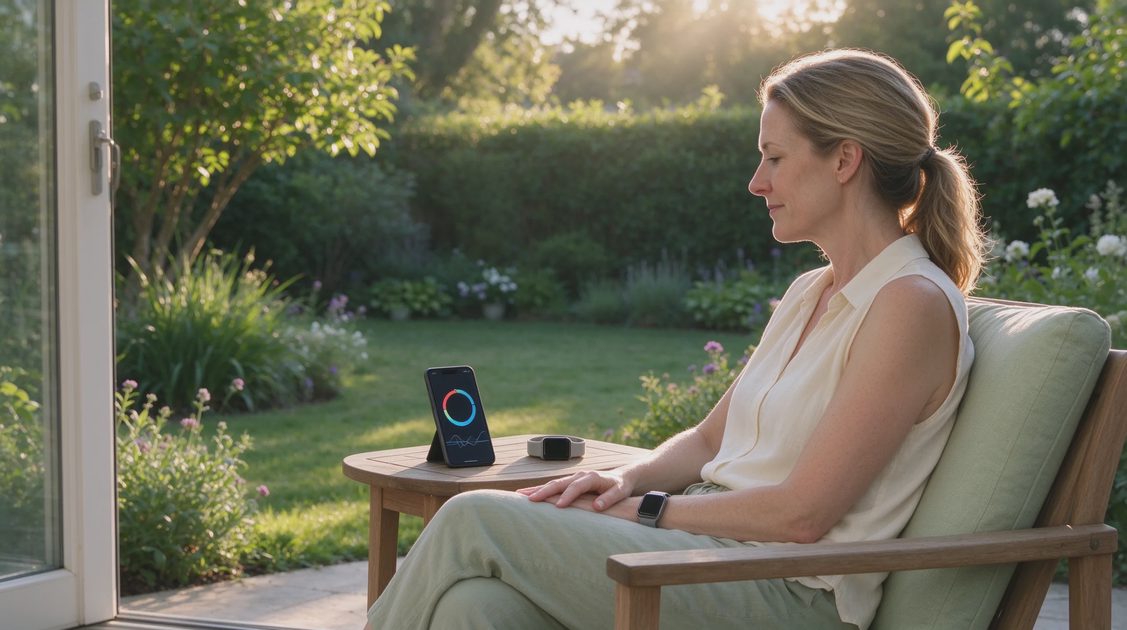
The morning is supposed to belong to the person living it. Too often it belongs to the phone. You wake, the screen lights up, and within a minute a sleep score, recovery number, or overnight graph has already suggested how the day should feel and what you are allowed to do. The routine that follows is shaped by that suggestion rather than by the actual shape of your life—whether a child needs breakfast, whether you have a hard meeting at nine, whether your body feels steady or heavy, whether the dog is waiting by the door.
I used to build mornings that looked impressive on paper and collapsed under real conditions. The app said I had recovered well, so I scheduled a demanding workout. Then a child woke early, the coffee took longer, and the carefully planned sequence fell apart. I felt behind before the day had properly started. The problem was not the desire for a good morning. The problem was letting the dashboard set the terms.
A sustainable morning routine begins with the life you actually have, not the optimized version an app imagines for you. The data can still inform small choices. It should never be the architect of the first hour.
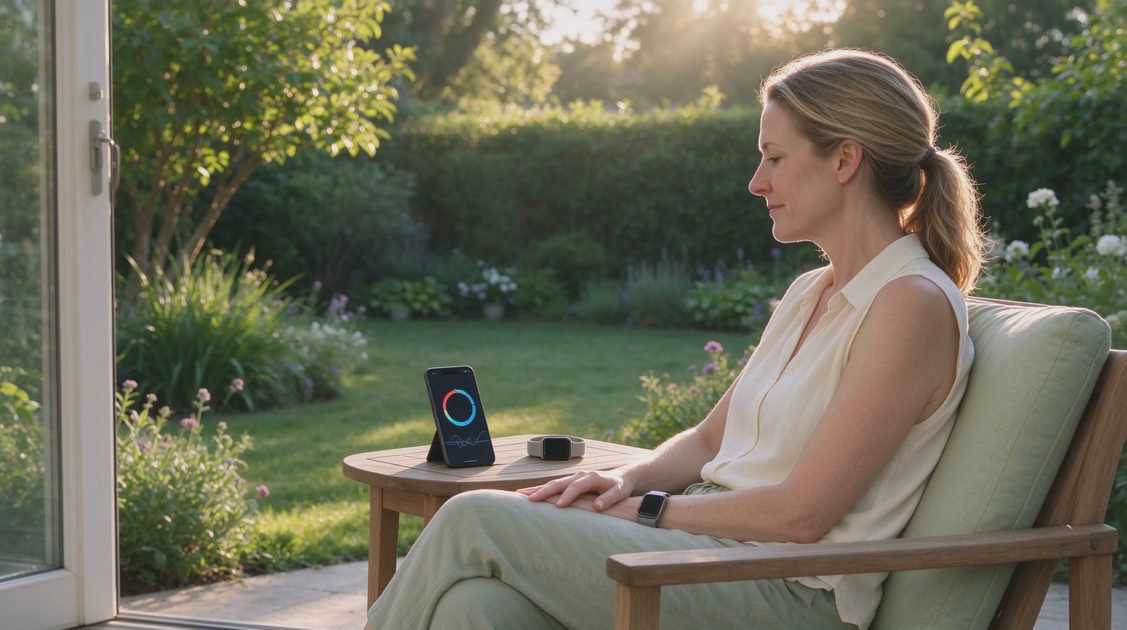
Start With the Real Constraints of Your Life
Before you add any habit or open any app, look honestly at what the morning already contains.
Map the non-negotiables first
List the things that must happen most weekdays: getting children ready, feeding a pet, a fixed work start time, medication, a partner’s schedule. These are the load-bearing walls. Any routine that ignores them will eventually crack. Write them down in the order they usually occur. This simple map keeps the fantasy version of the morning from taking over.
Notice your actual energy pattern
Some people wake clear and sharp. Others need thirty quiet minutes before their mind fully comes online. Neither pattern is superior. Trying to force a high-output sequence onto a slow-waking body creates friction that no amount of recovery data can fix. Spend a few days simply noticing when your energy naturally rises without trying to improve it. That observation becomes the foundation for realistic timing.
Account for the ordinary interruptions
Phones ring. Children change their minds about breakfast. The weather turns. A sustainable routine has built-in flexibility for the interruptions that already belong to your life. If every deviation feels like failure, the routine is too rigid for the conditions in which it must operate.
Design the Sequence Around Lived Experience
Once the constraints are clear, build the first hour in a way that serves the people and responsibilities already present.
Give the body the first word
Before any screen, give yourself a short window—five to fifteen minutes—to notice how you actually feel. Sit up, drink water, look out a window, or take three slow breaths. This is not another optimization ritual. It is a deliberate act of collecting primary data from the only source that lives inside your skin. The information you gather here is more relevant to the next decisions than most overnight scores.
Place movement and light where they fit, not where an app prefers
Morning light and gentle movement support alertness for many people. The form those take should match your setting. A ten-minute walk with the dog, standing on the porch with coffee, or stretching while the kettle boils can be enough. The goal is consistency that survives ordinary mornings, not a perfect sequence that only works when every variable is ideal.
Protect one small element that is purely yours
In households with children or dense schedules, the morning can feel entirely claimed by other people’s needs. Identifying one modest element that belongs only to you—three minutes of quiet, a particular way of making coffee, a short piece of music—creates a sense of ownership. That ownership makes the rest of the sequence feel less like pure service and more like a shared rhythm.
Keep Technology in a Supporting Role
Health apps and wearables can still be part of the morning. The order and the weight you give them determine whether they help or hinder.
Delay the first look at scored data
Many people find that waiting until after the basic sequence—water, light, movement, family logistics—is complete keeps the numbers from setting the emotional tone. By the time you open the app, you already know how the body feels and what the day requires. The data becomes one more input rather than the opening argument.
Choose metrics that actually change a decision
If a number does not regularly lead to a concrete, realistic adjustment you are willing to make, it does not need to appear in the morning. Total sleep time or a simple consistency view may be enough. Detailed stage breakdowns and multiple recovery scores often add more evaluation than insight at that hour of the day.
Allow the routine to flex with the season of life
A morning that works in a quiet month may need simplification during a heavy work stretch or when a family member is ill. Building in the expectation of flexibility prevents the sense that any change equals failure. The routine exists to serve the life, not the other way around.

A Practical Framework You Can Adjust
Here is a flexible structure many people adapt successfully. Treat it as a starting sketch, not a prescription.
The first fifteen minutes belong to the body and the household
Wake, water, brief body check-in, and the most urgent family or household needs. No scored health data yet. This window establishes that the day begins with lived reality.
The next fifteen to thirty minutes hold light movement and preparation
This is the place for a short walk, stretching, or simply standing in daylight while coffee brews. It is also the place for the practical tasks that make the rest of the day smoother—packing a bag, reviewing the calendar once, setting out what is needed for the afternoon.
Only then, if useful, a brief and bounded data glance
If you still want the overnight numbers, look at them with a specific question already formed: “Does this match how I feel?” or “Is there a multi-day pattern worth noting?” Keep the window short. Close the app and return to the day.
This sequence is not sacred. Some people reverse pieces of it. Some collapse it into a tighter window on busy days. The principle remains: life first, data second, flexibility always available.
A morning routine that survives contact with real life is more valuable than one that looks perfect in an app. Build it around the people, the energy, and the responsibilities that are already present. Let the data inform the edges if it is useful. Never let it become the architect. Let the data inform you, not run you. The first hour is part of your actual life. It deserves to be shaped by that life, not by a dashboard.




Letters
No letters yet — be the first to write.