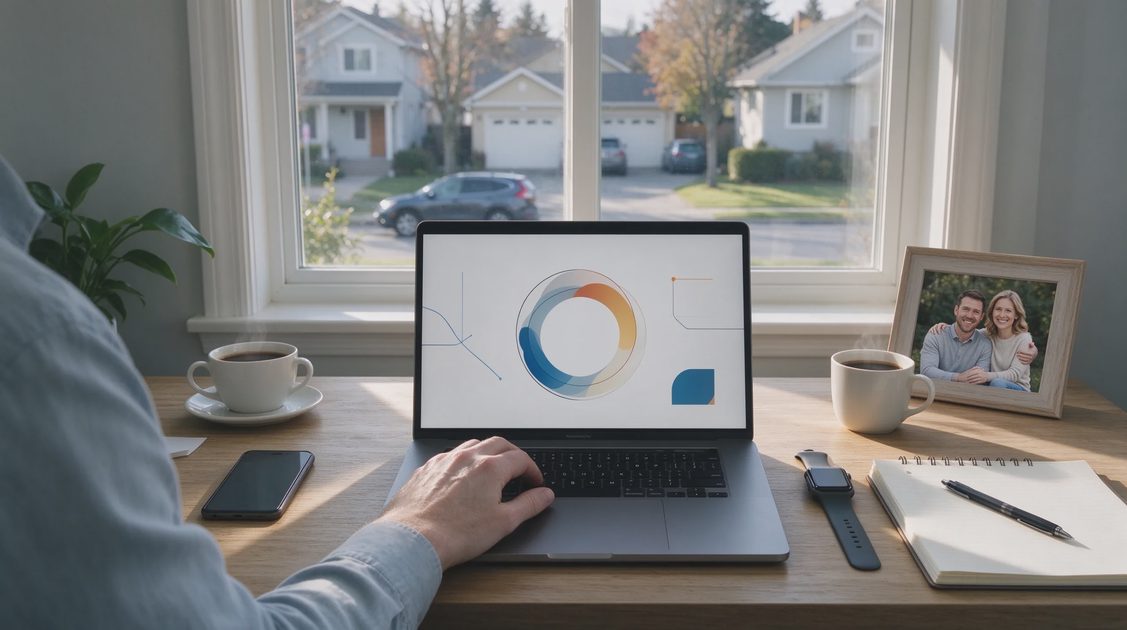
There is a quiet line most people cross without noticing. On one side of the line, tracking helps you notice patterns and make small, useful adjustments. On the other side, the numbers begin to decide how you feel about yourself and what you are allowed to do with the day. The same device that once felt empowering starts to feel like a supervisor that never clocks out.
I have watched this shift happen in research labs and in living rooms. It is rarely dramatic. It is a gradual tightening. One day you realize you are rearranging plans, cancelling movement, or carrying a low-grade sense of failure because of a single reading. The tool is no longer serving the life. The life is serving the tool. The good news is that the line can be crossed back in the other direction with deliberate, modest changes.
Recognizing the Signs That Tracking Has Taken Over
The shift is easier to reverse when you catch it early. Certain patterns appear again and again.
Mood rises and falls with the numbers
You open the app and immediately feel lighter or heavier. A “good” score grants permission to have a normal day. A “bad” one creates a sense of deficit that colors conversations, work, and rest. When a single metric can rewrite your emotional state before breakfast, the relationship has already tilted.
Decisions shrink to fit the data
You cancel a walk because the recovery number is low, even though your body feels ready. You push through fatigue because the score looks strong. You stay in bed longer than you need in hopes of improving tomorrow’s number. Plans that once belonged to you now require permission from the dashboard.
Checking becomes automatic and frequent
You reach for the phone without a specific question. You open the app multiple times a day “just to see.” The behavior no longer feels like a choice. It feels like a requirement. When the urge to check is stronger than the usefulness of the information, compulsion has begun to replace curiosity.
Why Helpful Tracking Turns into Quiet Control
Understanding the mechanisms makes it easier to loosen them.
The brain treats scores as social evaluation
Humans are wired to care about feedback. A color-coded score or a percentile ranking activates the same circuitry that once helped us stay accepted in a group. The device has no intention of judging you, yet the nervous system still registers the number as a form of evaluation. Over time that evaluation becomes internalized.
Design encourages frequent engagement
Apps are built to be opened. Notifications, streaks, rings, and prominent placement of scores all increase the likelihood of checking. The more often you check, the more opportunities the number has to influence mood. Frequency itself becomes part of the problem.
Uncertainty feels safer when measured
Health is full of ambiguity. Tracking promises a sense of control. When life feels unpredictable, the clear number can feel like solid ground—until the number itself becomes another source of unpredictability. The very tool meant to reduce uncertainty begins to generate new forms of it.
Practical Steps to Put Data Back in Its Place
You do not have to abandon tracking. You only have to change the terms of the relationship.
Introduce a deliberate delay
Decide that health data is off-limits until a specific point in the morning or day. Many people choose after the first cup of coffee, after a short walk, or after the first work block. The delay gives lived experience the first word and reduces the score’s power to set the emotional tone.
Limit the metrics that remain visible
Turn off or hide every number that does not regularly inform a decision you are actually willing to make. Most people need far fewer metrics than the app offers. A shorter list means fewer chances for noise to become anxiety. Review the remaining metrics on a schedule you choose rather than on the app’s preferred rhythm.
Create a personal rule for action
Mine is simple: I do not change any plan based on a single day’s data. I require at least three similar days plus matching subjective evidence before I experiment with an adjustment. The rule protects against over-reaction while still allowing useful trends to surface. Write your own version and keep it somewhere visible.

Reclaiming Ordinary Decision-Making
The deeper goal is to remember that you are the one living the day. The data is a guest, not the host.
Practice deciding before you look
On days when you feel the pull to check, pause and make one small decision first—what to eat, whether to walk, how to structure the next hour. Then, if you still want the number, look. The sequence reinforces that authority remains with you.
Notice what improves when the numbers quiet down
Many people report that mood stabilizes, mornings feel more spacious, and decisions become simpler once the constant evaluation softens. Energy that was spent managing the emotional impact of scores becomes available for actual living. That reclaimed capacity is often more valuable than the precision the data claimed to offer.
Allow seasons of lighter tracking
There will be periods when life is already demanding—illness, travel, family stress, heavy work. During those stretches it is often wiser to reduce or pause detailed tracking rather than add another layer of evaluation. Returning to fuller tracking later is always an option. The relationship can flex with the season of life.
Tracking is useful when it helps you notice patterns you might otherwise miss and when it supports decisions that make ordinary days better. It stops being useful when it begins to run those days. You are allowed to redraw the boundary. Let the data inform you, not run you. The day belongs to the person living it.



Letters
No letters yet — be the first to write.